in
Breakfast in Thailand is not a big formal meal. It is quick, warm and eaten close to home or work: at street stalls, in markets and at old-style coffee shops. For a visitor it is one of the easiest ways to eat like a local, and one of the cheapest meals of the day. The main rule is timing: go early, because many breakfast stalls open around 6am and sell out or close by 9 or 10am.
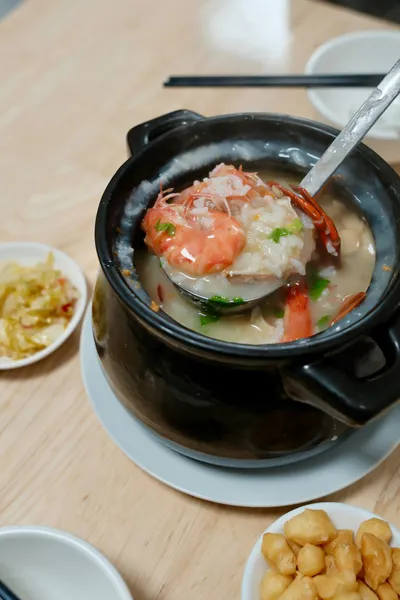
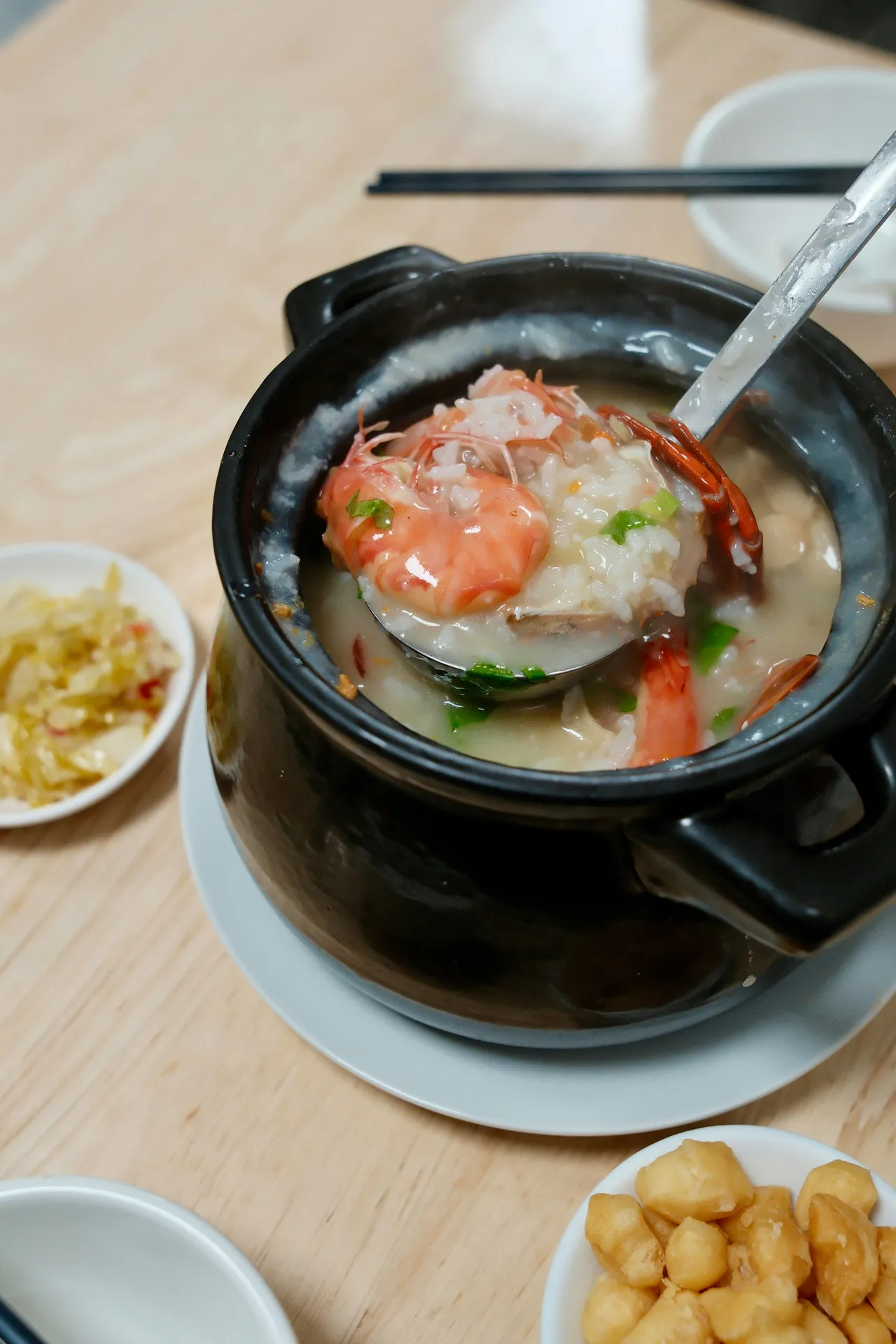
Jok is a thick rice porridge, usually cooked with minced pork or chicken and finished with a soft egg, fresh ginger and spring onion. You season it yourself with pepper and a splash of soy or fish sauce. It is mild, filling and gentle on the stomach, which makes it a good first Thai breakfast.
Khao tom is lighter than jok: cooked rice served in a clear, savoury broth with pork, chicken or seafood. Stalls put a condiment caddy on the table, usually chilli vinegar, sugar, fish sauce and ground dried chilli, so you can adjust the flavour yourself. It is a common morning meal for people who want something warm but not heavy.
Sticky rice with grilled pork skewers, wrapped up to take away. Vendors grill the pork over charcoal early in the morning, and the smell is how many people find the stall. It is the classic breakfast for eating on the way to work or school.
Thai fried dough sticks, crisp outside and soft inside. People dip them in sweetened soy milk or eat them with sweetened condensed milk. Look for carts and market stalls selling them fresh in the morning; they are best within minutes of frying.
In the south and in older neighbourhoods you will find roti for breakfast, either savoury with curry or sweet with condensed milk and sugar. In the northeast and in vintage cafes, look for kai grata: eggs pan-fried in a small pan, often with Chinese sausage or Vietnamese-style pork.
Old-style coffee shops, called ran kafae boran, serve strong coffee brewed through a cloth filter and sweetened with condensed or evaporated milk, along with soft-boiled eggs and toast with butter and sugar. They are often near older markets and have been run by the same family for decades. Thai iced coffee and cha yen, the orange milk tea, are sweet by default; ask for wan noi if you want less sugar.
Pointing and smiling works fine, and many vendors are used to visitors. Stalls are still cash-first, though QR payment is now common even at small carts. Breakfast is very affordable: most dishes cost a few dozen baht, and a full breakfast with coffee rarely costs much more.
Go early. Breakfast stalls are busiest before work, around 6:30 to 8:30, and many close or sell out by 9 or 10am. Markets are at their best in the first hours of the day.
A Thai breakfast is simple, warm and inexpensive. Follow the office workers and school uniforms at seven in the morning, point at what they are eating, and you will eat well for very little money.