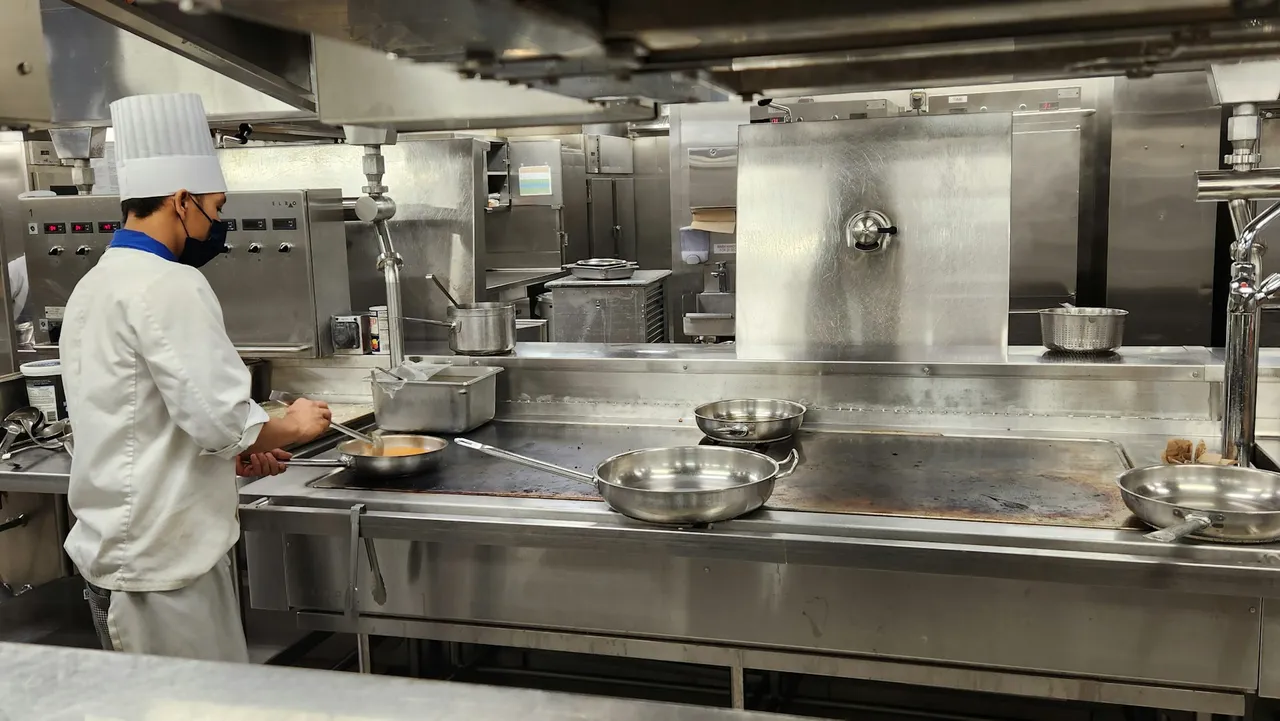
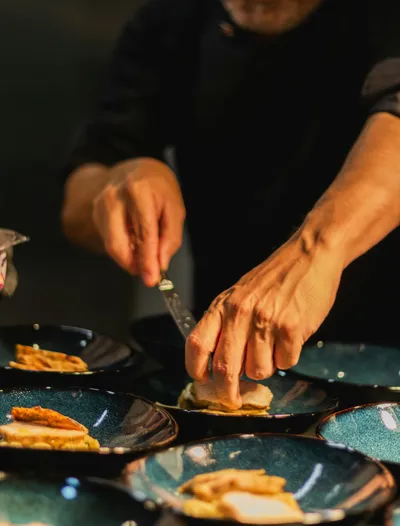
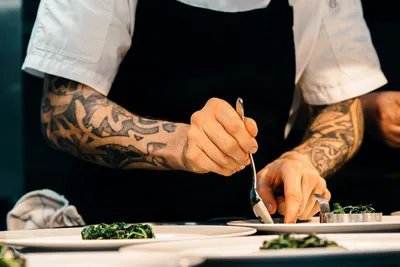
In the age of social media, one customer complaint can go viral instantly. Thai consumers in 2026 are hyper-aware of hygiene and actively look for the government's "Clean Food Good Taste" certification before entering a shop. Obtaining your Food License isn't just about avoiding fines, but it is the fastest way to signal to new customers that your kitchen is safe, professional, and trustworthy.
For restaurant owners, "Food Safety" is not just about wiping down tables. It is about navigating a complex web of laws involving the Bangkok Metropolitan Administration, the Local District Office, and the Thai Food and Drug Administration.
Many owners mistakenly believe that the Thai FDA only regulates factories. This is a dangerous oversight. If you bottle your signature chili paste to sell at the counter, or if you vacuum-seal marinated meats for delivery, you may have unknowingly crossed the line from "Restaurant" to "Food Manufacturer."
This guide cuts through the bureaucratic confusion to help you protect your customers and your reputation.
The Evolution of the Thai Kitchen
Ten years ago, a restaurant just cooked food and put it on a plate. Today, the business model has changed. Thai restaurants have become hybrid businesses:
- Dine-In: Traditional service.
- Delivery: High-volume.
- Retail: Selling jars of chili paste, bottles of sauces, or frozen sausage branded by the restaurant.
The Regulatory Trap
Here is where Thai owners commonly get fined.
- Scenario: You make a delicious salad dressing. Customers love it, so you put it in plastic bottles and stack them by the cashier to sell for 150 THB.
- The Violation: As soon as you seal your food in a container to sell for take-away or retail, you are technically a manufacturer. Without a Thai FDA number on that bottle, you are liable for fines up to 30,000 THB and potential imprisonment.
The Economic Impact
Non-compliance isn't just about fines; it's about opportunity cost. You cannot put your product in 7-Eleven, Gourmet Market, or even on Shopee/Lazada without that FDA number. By ignoring these safety standards, you are the one who caps your own growth.
Determining Your Requirements
To stay compliant, you must understand which agency oversees you. It is usually a mix of Local Government and National FDA.
1. The Foundation
Before worrying about the FDA, every restaurant in Thailand must pass the local hygiene inspection from the Local District Office or Municipality.
For Small Venues (Less than 200 sq. meters):
- License Required: Certificate of Notification
- Key Requirements: Grease trap, pest control, basic hygiene.
For Large Venues (More than 200 sq. meters):
- License Required: License to Establish a Place for Food Sale
- Key Requirements: Detailed blueprint inspection, wastewater treatment, staff medical checkups.
Local officers are now using pH test kits and bacterial swabs during random inspections more frequently than in previous years.
2. Primary GMP
If you plan to sell packaged goods under your brand, you need FDA approval. The standard for SMEs is Primary GMP (The Basic GMP).
The 5 Pillars of Primary GMP:
- Location: The production area must be separated from the living area. You cannot bottle your sauce in the exact same room where your cat sleeps.
- Equipment: Work surfaces must be non-absorbent and easy to clean. Stainless steel is the industry standard. Wooden chopping boards are generally banned in production areas due to bacteria retention.
- Process Control: You must have a written recipe and process.
- Sanitation: Proper drainage, insect screens on windows, and a strict cleaning schedule.
- Personnel: Staff must wear hairnets, gloves, and masks. No jewelry allowed during production to prevent physical contamination and hidden bacteria.
3. Food Labeling Laws
If you get FDA approval, your label must comply with Ministry of Public Health Notification No. 450.
- Must Have: Name of food, FDA Number, Net weight, Ingredients list, Allergen warning, Name/Address of manufacturer, Production/Expiry date, and Storage Instructions (e.g., "Keep Refrigerated").
- Common Mistake: Printing claims like "Best in Bangkok" or "Cures Cancer" on the label. This violates advertising laws and carries heavy fines.
Passing the FDA Audit in a Narrow Thai Shophouse
Achieving these standards in a shophouse kitchen is difficult, but it is possible.
The "Zoning" Strategy
Thai shophouses are narrow. To pass GMP/FDA audits, you must create the right "Flow."
- Strategy: Ensure a linear flow: Raw Material -> Washing -> Cooking -> Packing -> Finished Goods Storage.
- Rule: The finished product must never cross paths with raw meat. If your dirty dish return path crosses your salad prep station, you will fail the audit.
Water Quality Management
Thailand's tap water is not food-grade.
- Action: Install a commercial filtration system.
- Documentation: You must send water samples to a lab once a year to test for E. coli and Coliform. Keep this certificate; the inspector will ask for it.
The "Ice Machine" Trap: If you produce your own ice, filtering the water isn't enough.
- Biofilm Risk: Inspectors will shine a flashlight up the ice chute. If they see "pink slime" (biofilm) or black mold, you fail immediately. You must schedule deep cleaning for the machine internals, not just change the filter.
- The Scoop Rule: Never leave the ice scoop inside the bin. It must be stored in a holder on the wall to prevent handle-to-ice contamination.
- Note: If you buy ice, simply keep the FDA certificate from your supplier on file.
Pest Control Contracts
You cannot just buy a can of Baygon spray for pest control.
- Requirement: You need a contract with a professional pest control company that visits monthly to meet the industry standard. They will place bait stations and provide a "Service Report." This report is your legal proof of due diligence.
Staff Training
Even the best equipment fails if staff are untrained.
- The "Hand Washing" Protocol: Install a dedicated hand-washing sink, which is separated from the dish sink, with foot-pedal operation if possible.
- Uniforms: Provide aprons that remain in the kitchen. Staff should not wear their cooking apron to the toilet or out to smoke.
Turning Regulatory Disasters into Compliance Wins
The "Curry Paste" Problem
- Context: A popular Southern food restaurant started selling jars of their curry paste. They sold 500 jars a month.
- Issue: A competitor reported them. The FDA raided. They had no FDA number, and the paste was being packed in the open-air kitchen exposed to road dust.
- Consequence: A 30,000 THB fine and a recall of all products.
- Fix: The owner rented a small 20 sqm room nearby, renovated it to Primary GMP standards (epoxy floor, enclosed room), and registered it as a production site.
The "Ice Cube" Incident
- Context: A café used ice delivered in rice sacks from a local supplier.
- Issue: A customer found a piece of plastic wire in their drink and posted it online.
- Investigation: The ice supplier was unlicensed.
- Fix: The café switched to a certified ice supplier and installed their own ice machine. Although costs rose by 15%, they used "Clean Ice" as a marketing point to regain trust.
Systems That Scale & Protect
- Traceability is Key: If a customer gets sick, can you trace which batch of shrimp caused it? FDA standards require you to record "Lot Numbers" of incoming raw materials.
- The "OEM" Shortcut: If getting your own FDA license is too hard or expensive, hire an OEM Factory. You send them your recipe; they cook, bottle, and register it with their FDA license. The label will say "Manufactured by [Factory ," but the brand on the front is yours. This is 100% legal and the fastest way to market.
- Temperature Logs:
- Manual: Buy a digital probe and hang a clipboard on the fridge. Staff must check and write down the temp twice daily.
- Automatic (Recommended): Buy a "Temperature Data Logger." This device sits in the fridge and records the temp 24/7. If the power cuts at 3 AM, you will know exactly how long your food was in the "Danger Zone."
How Aroi Supports Food Safety
While your POS handles the stock, Aroi handles the data required for an investigation.
- Digital Log: Use Aroi's Guest CRM to see exactly who dined on a specific night. While marketed for loyalty, it acts as a digital logbook for safety investigations.
- Instant Feedback Alert: Aroi’s system pushes instant negative review alerts to your phone. This allows you to catch complaints about illness immediately, rather than waiting days to check your email.
- Digital Contact Tracing: If a government recall happens, you can filter your CRM to find every customer who visited during the affected week and notify them instantly.
Why Compliance Wins Loyalty
Compliance with Thai FDA and hygiene standards is not just about avoiding fines. It is the ultimate insurance policy for your business.
In a market like Thailand, where street food is delicious but risky, a restaurant that can prove its safety standards stands out. When you display that FDA number or your "Clean Food Good Taste" badge, you are telling your customer that you care about their life.
Walk into your kitchen. Look at the sauces you are selling for take-home. Do they have a label with an FDA number? If not, stop selling them immediately and contact a consultant or the FDA One Stop Service Center (OSSC) for free advice.