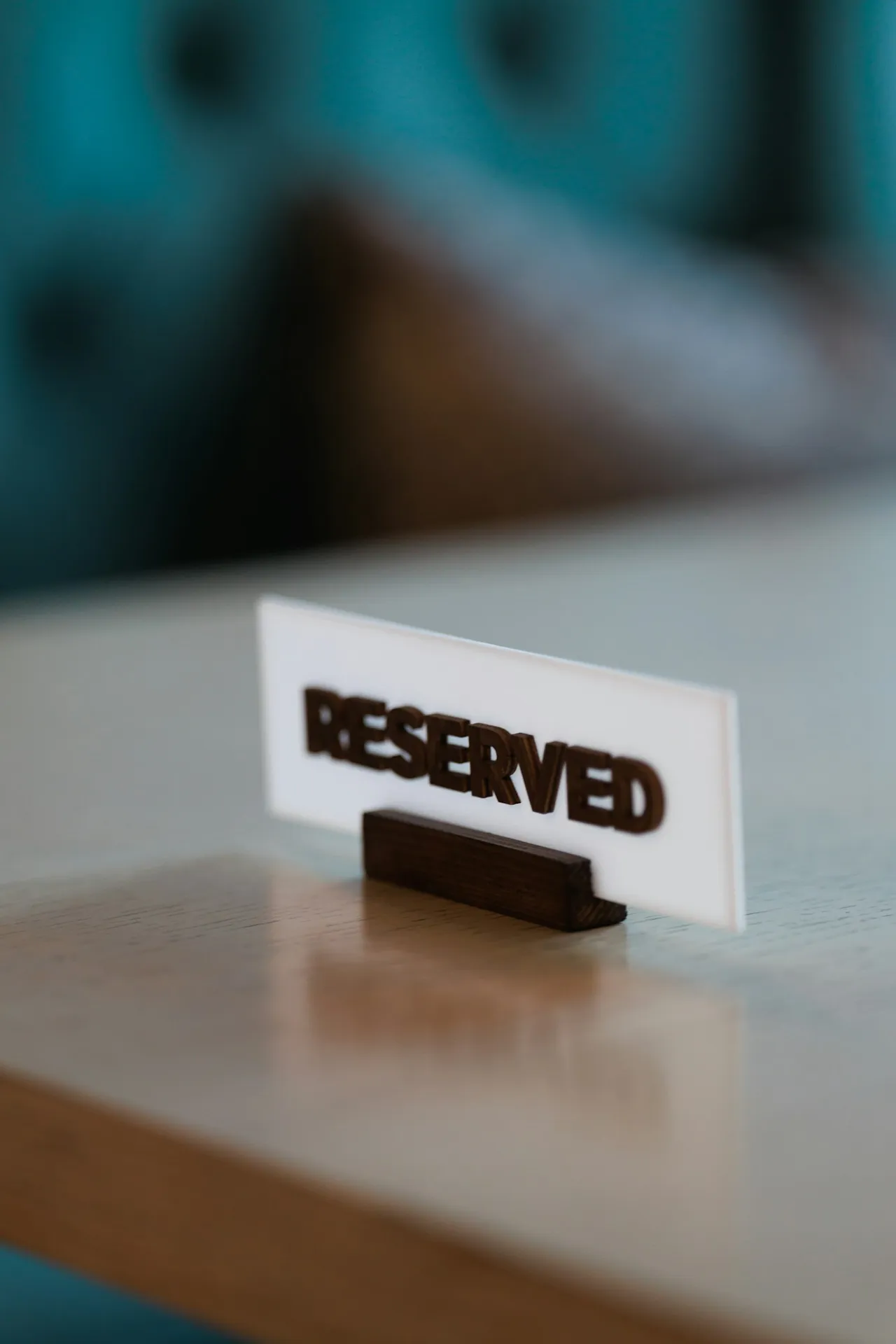
It is Friday night in Thong Lo. Your host is staring at a fully booked floor plan on the iPad. But by 7:30 PM, three prime tables are empty due to customers ghosting you. You try to call them, but they don't pick up at all.
Meanwhile, a walk-in group of four arrives, but your system turns them away because it says you are full.
This scenario is the "silent killer" of your profitability in 2026. With labor costs rising and rent in prime Bangkok districts hitting new highs, you cannot afford these empty seats.
Many owners try to solve this by signing up for every single platform available: Eatigo for traffic, Chope for discovery, and maybe TableCheck for VIPs. But then you realise, you are actively paying multiple monthly fees, per-head commissions, and losing control of who your customers actually are.
The solution isn't to be everywhere to get more customers. The real solution is to be smart. The real question you should ask yourself is: Which specific model fits my business?
In this guide, we break down the major players in the Thai market, comparing the Marketplace Model (Eatigo, Chope) vs. the Direct Booking Model (Aroi, TableCheck) to help you stop renting your customers and start owning them.
The Shift from "Traffic" to "Retention"
Many years ago, the goal of a reservation platform was simple: Get bodies in seats. Platforms like Eatigo exploded because they promised to fill empty tables during off-peak hours using deep discounts.
But in 2026, the landscape has changed completely.
- High Customer Acquisition Cost (CAC): Relying on third-party apps to get new customers is expensive. You often pay a commission per head ranging from 20 to 50 THB, or give away 50% margins.
- Data War: If a customer books via a third-party app, the app owns all customer data, not you. You cannot re-target them via Line OA or Facebook Ads because you don't have their data.
- Deposit Culture: Thai consumers are now familiar with paying deposits via QR PromptPay for high-demand spots. If your system cannot automate this, you are vulnerable to no-shows.
In Thailand, Line OA is the ultimate CRM tool. Your reservation system must feed data into your Line OA. If your booking platform keeps data in a silo, you are losing the long-term marketing game.
The Three Types of Booking Engines
To choose the right tool for your restaurant, you must understand these business models.
1. The Discounter (e.g., Eatigo)
- The Logic: Yield Management. They sell your empty tables at 3 PM at a discount.
- Pros: Fills seats that would generate no income. Good for new restaurants needing more buzz.
- Cons: Attracts price-sensitive customers who rarely return at full price. Can devalue your brand image.
- Best For: Buffets, hotel all-day dining, casual chains needing volume.
2. The Marketplace / Discovery (e.g., Chope, Hungry Hub)
- The Logic: They act as a search engine for food. Users browse the app to decide "Where to eat?"
- Pros: High visibility to tourists and expats.
- Cons: Expensive per-cover fees. You pay for customers who might have come anyway. High competition.
- Best For: Mid-to-high-end restaurants in tourist areas relying on expat/tourist traffic.
3. The Direct Booking Engine (e.g., Aroi, TableCheck, SevenRooms)
- The Logic: White-label software that lives on your website.
- Pros: Zero commissions per head. You own 100% of the customer data.
- Cons: You must generate your own traffic.
- Best For: Established brands, Omakase, Chef's Table, and popular casual dining spots with a strong social media following.
Designing Your Reservation Strategy
You don't necessarily have to pick just one platform. Many successful restaurants use a Hybrid Strategy.
Strategy A: The "Funnel" Approach
- Launch Phase: Use Eatigo/Chope to get traffic. Accept the high cost as their "Marketing Expense."
- Growth Phase: Place QR codes on tables inviting customers to add your Line OA.
- Retention Phase: For their second visit, lead them to book via Aroi on your Line Rich Menu.
- Result: You pay commission for the customer’s first visit, but no extra commission fee for all future visits.
Strategy B: The "Deposit" Shield
If your Average Ticket Size is >1,000 THB, you should enable deposits immediately.
- The Rule: Any booking of 5+ pax or prime time slots requires a deposit.
- The Tool: Use a system like Aroi that auto-generates a PromptPay QR. If the customer doesn't pay within 30 minutes, the table is auto-released.
Checklist: Before you sign a contract
- [ ] Does it support Thai Language?
- [ ] Is the pricing flat or per-head? Calculate your covers. If you do 1,000 covers/month, a 30 THB fee = 30,000 THB/month. A flat fee system is usually cheaper.
- [ ] Can I export my customer data? If you leave the platform, do you get to keep the customer data?
Matching the Model to the Problem
The Popular Omakase
- Problem: The restaurant has only 10 seats per round. A single no-show kills 10% of revenue instantly. They used Line Chat to take bookings, but admins were slow to reply, and customers ghosted after booking.
- Solution: Switched to a Direct Booking System (Aroi).
- Workflow: Customer clicks "Book" on Instagram -> Selects Seat -> Pays 100% upfront via Credit Card/QR.
- Result: Revenue secured by 100%. Admin workload reduced by 90%.
The Riverside Buffet
- Problem: Huge capacity (300 seats). Weekends are full, but weekdays are empty.
- Solution: Used Eatigo for weekdays only.
- Workflow: Opened slots for 50% discount at 14:00 and 16:00 on weekdays. Kept Friday-Sunday exclusive for full-price walk-ins and direct bookings.
- Result: Covered fixed costs during dead hours without hurting weekend profit.
The Multi-Branch Isan Chain
- Problem: 5 branches. Customers kept calling Branch A to book tables at Branch B.
- Solution: Centralized booking via Aroi.
- Workflow: A single Line OA Rich Menu link lets customers choose the branch. The Call Center sees real-time availability across all 5 locations.
- Result: Cross-branch management became seamless.
Strategies for Every Business Stage
- For Small Operators (1 Branch): Start with Direct Booking (Aroi) linked to your Line OA. It builds your database from Day 1. Only use marketplaces if you want more traffic and have high margins to burn.
- For Mid-Sized Operators (Multi-branch): You need a Centralized Dashboard. Ensure your reservation system talks to your POS. If a VIP books, your floor manager should see "High Spender" on the KDS or POS terminal.
- The "Commission Trap": Calculate your Effective Cost Per Booking. If you spend 20,000 THB/month on commissions to Chope/Eatigo, could you instead spend 10,000 THB on Facebook Ads for driving traffic to your own booking link? Normally, the ads yield better long-term ROI.
Aroi: The Solution That Fills the Market Gap
While platforms like Chope and TableCheck are excellent for specific business models, Aroi fills the gap for the modern Thai SME owner who prioritizes Profit Margin and Data Control.
- The "Deposit" Engine: Aroi’s standout feature is the seamless integration of Thai payment methods.
- The "Private Domain" Builder: Unlike marketplaces that hide customer details, Aroi automatically captures every customer profile, allowing you to build your own database.
Stop Renting, Start Owning
In the competitive Thai restaurant market of 2026, a reservation is not just a name on a list; it is a financial transaction and a data point.
If you rely only on marketplaces, you are renting your customers from a third-party platform. If you rely on manual notebooks, you are leaking revenue through human error.
The sweet spot is a Direct Booking System that protects your margins, secures deposits automatically, and builds your customer database.
Review your reservation bills from last month. Calculate exactly how much you paid in "per cover" commissions. If that number exceeds 3,000 THB, it is time to look at a Flat-Fee Direct Booking system.